

How Can a Pro SEO Reseller Build Citation-Worthy Content Assets?
Oct 19, 2026
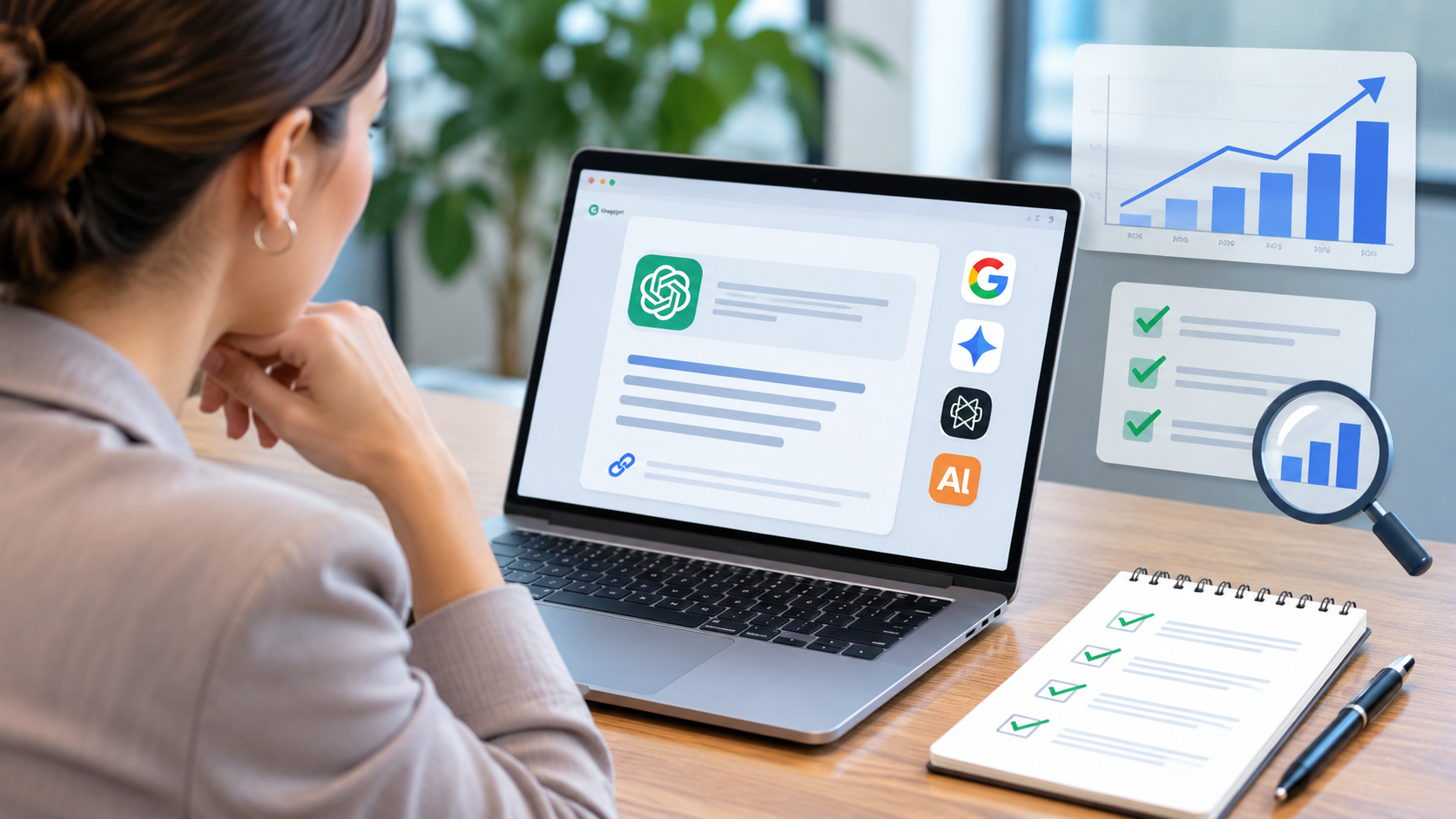
AI-powered search is changing how people discover businesses, compare services, and make purchasing decisions. Alongside traditional search engine rankings, your brand’s visibility in AI-generated answers, summaries, and recommendations is becoming an important area to evaluate. However, appearing in these experiences requires more than publishing content around popular keywords.
An AI search visibility audit helps you understand how your brand appears across AI-powered search platforms, which sources support your online presence, and where competitors may have stronger visibility. With a structured approach, you can identify content gaps, improve brand recognition, and build a strategy around meaningful search opportunities. Partnering with a Pro SEO Reseller can help your agency organize this process and turn audit findings into actionable SEO and Generative Engine Optimization (GEO) improvements.
An AI search visibility audit evaluates how consistently and accurately your brand appears when users ask relevant questions on AI-powered search platforms. It examines brand mentions, citations, source quality, content relevance, and competitor presence.
Unlike a traditional SEO audit, which often emphasizes crawlability, indexing, backlinks, and organic rankings, an AI visibility audit also investigates how well your content answers conversational queries and provides information that AI systems can retrieve and reference.
Your audit may cover:
Remember that AI responses can vary by platform, query wording, location, and time. An audit measures observable visibility patterns rather than guaranteeing inclusion in future answers.
Before collecting data, establish what success means for your business or client. A broad goal such as “improve AI visibility” is difficult to measure without clear objectives.
Start by identifying your target audience, priority services, business locations, and important customer questions. Then decide whether your audit should prioritize brand discovery, product comparisons, informational searches, or purchase-related queries.
For example, a digital marketing agency might investigate whether AI platforms mention its SEO services when users ask about outsourcing SEO, white-label partnerships, or scalable agency delivery.
Set baseline indicators such as:
These measurements create a practical starting point for tracking changes over time.
AI visibility depends on the questions people ask, not just the keywords they type. Build a query library that reflects the complete customer journey.
Organize queries into four categories:
Informational: What is GEO, and how does it differ from traditional SEO?
Commercial: Which SEO reseller services are suitable for growing agencies?
Comparative: What should you compare when choosing an SEO outsourcing partner?
Transactional: Where can an agency find a reliable white-label SEO provider?
Include variations involving industry terminology, customer problems, brand names, and follow-up questions. You can use customer support conversations, keyword research, sales questions, and website analytics to discover realistic query opportunities.
Keep a consistent set of queries for repeat audits. This makes comparisons more useful than testing unrelated prompts each month.
Run your query set across relevant platforms, such as ChatGPT, Gemini, Perplexity, Claude, and Google AI search experiences. Record the exact question, date, platform, response, brand mentions, cited URLs, and competitors.
Use a spreadsheet or an AI visibility monitoring tool to organize your findings. For every result, distinguish between three outcomes:
Mention: Your brand appears in the answer.
Citation: Your website is explicitly linked as a source.
Recommendation: Your business is suggested as a relevant option.
These outcomes are not interchangeable. A brand may be mentioned without a link, while a website may be cited without its business being recommended. Repeat important tests under comparable conditions because generated answers can change.
Identify competitors that appear more frequently in your priority queries. Examine the pages and third-party sources cited in their answers.
Look for patterns such as:
Use these findings to discover opportunities rather than copying competitors. If competing businesses are repeatedly referenced by authoritative industry publications, consider developing original research or pursuing relevant editorial coverage.
A structured AI visibility audit framework can also help you understand how mentions, citations, and competitor performance fit into a broader measurement strategy.
Once you identify visibility gaps, examine the pages that should support your brand’s expertise.
Check whether your website clearly explains your services, target audience, business identity, experience, and unique value. Review important landing pages, service descriptions, author information, case studies, and FAQs.
Prioritize the following improvements:
Answer-first content: Address the main question early, then provide supporting explanations and practical details.
Semantic coverage: Include related concepts, relevant entities, customer concerns, and natural language variations without forcing keywords.
Clear content structure: Use descriptive headings, concise paragraphs, meaningful internal links, and informative page titles.
Evidence and accuracy: Support claims with verifiable facts, original examples, credible references, and transparent methodology.
Technical accessibility: Check indexing, crawlability, canonical tags, redirects, mobile usability, and relevant structured data.
Structured data can help search systems interpret page content, but it does not guarantee AI citations. Likewise, no single formatting technique guarantees visibility across every platform.
An audit becomes valuable when it leads to specific improvements. Group findings by impact, effort, and business relevance.
| Audit finding | Recommended action |
| Competitors appear for key industry questions | Create stronger, more complete answer-focused pages |
| Your website is rarely cited | Improve relevance, evidence, clarity, and source quality |
| AI responses describe your business inaccurately | Update inconsistent service details and brand information |
| Important customer questions remain unanswered | Build focused FAQs and supporting topic-cluster content |
| Technical problems affect key pages | Resolve crawling, indexing, and page accessibility issues |
A Pro SEO Reseller can help agencies coordinate technical SEO, semantic content development, competitor analysis, and GEO-focused reporting through a consistent workflow. This makes it easier to prioritize improvements across multiple client websites without treating AI visibility as an isolated marketing task.
Establish a monthly or quarterly review schedule, depending on your campaign size and reporting needs. Reuse your original query set, keep platform and market conditions consistent where possible, and document any changes to your testing method.
Track mention rate, website citation rate, competitor share of voice, brand-description accuracy, and AI-referred traffic where measurable. Pair these indicators with traditional SEO metrics, such as organic impressions, clicks, conversions, and qualified leads.
Do not interpret one successful response as proof of sustained visibility. Instead, look for repeated patterns across relevant queries and platforms. This creates a more dependable basis for content decisions and client reporting.
An AI search visibility audit evaluates whether your brand appears, receives citations, and is accurately represented in AI-generated answers. It also identifies competitor visibility, content gaps, and opportunities to strengthen your online presence.
Monthly reviews are useful for active campaigns, while quarterly audits may suit smaller websites. The ideal frequency depends on your goals, resources, and how quickly your industry changes.
Consider ChatGPT, Google AI Overviews, Gemini, Perplexity, and Claude. Prioritize platforms relevant to your audience and track each separately because their responses and cited sources can differ.
A reseller partner can support technical SEO, semantic optimization, content development, entity consistency, and citation analysis. These activities can improve your website’s ability to communicate relevant information, but no provider can guarantee inclusion in AI-generated answers.
Traditional SEO focuses on improving visibility in search engine results. GEO focuses on helping content become understandable, relevant, and potentially citable in generative AI responses. Both approaches can complement each other.
Your AI visibility audit should be more than a report of brand mentions. It should reveal where your business is visible, where competitors have an advantage, and which improvements deserve attention first.
With consistent testing, useful content, reliable evidence, and technical SEO foundations, you can build a measurable strategy for improving visibility across traditional and AI-powered search experiences.
Partner with Pro SEO Reseller to develop a practical approach to SEO, semantic content, and GEO that supports your agency’s growth.